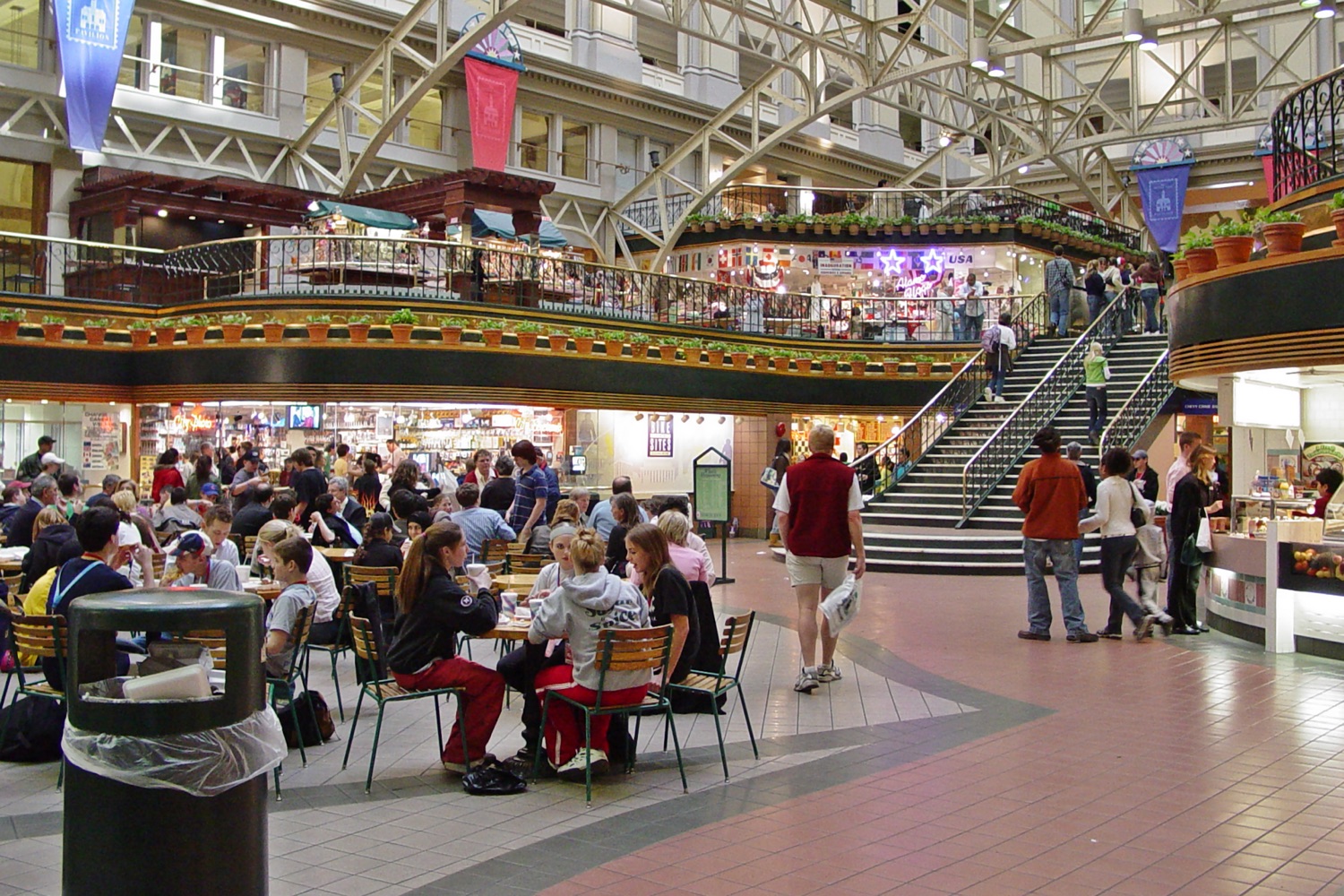
For thirty years a visit to the Old Post Office meant a tray of food, a seat in the light court and a ride up to the tower. The Pavilion was Washington's experiment in mixing a federal office building with a public marketplace.
A festival marketplace
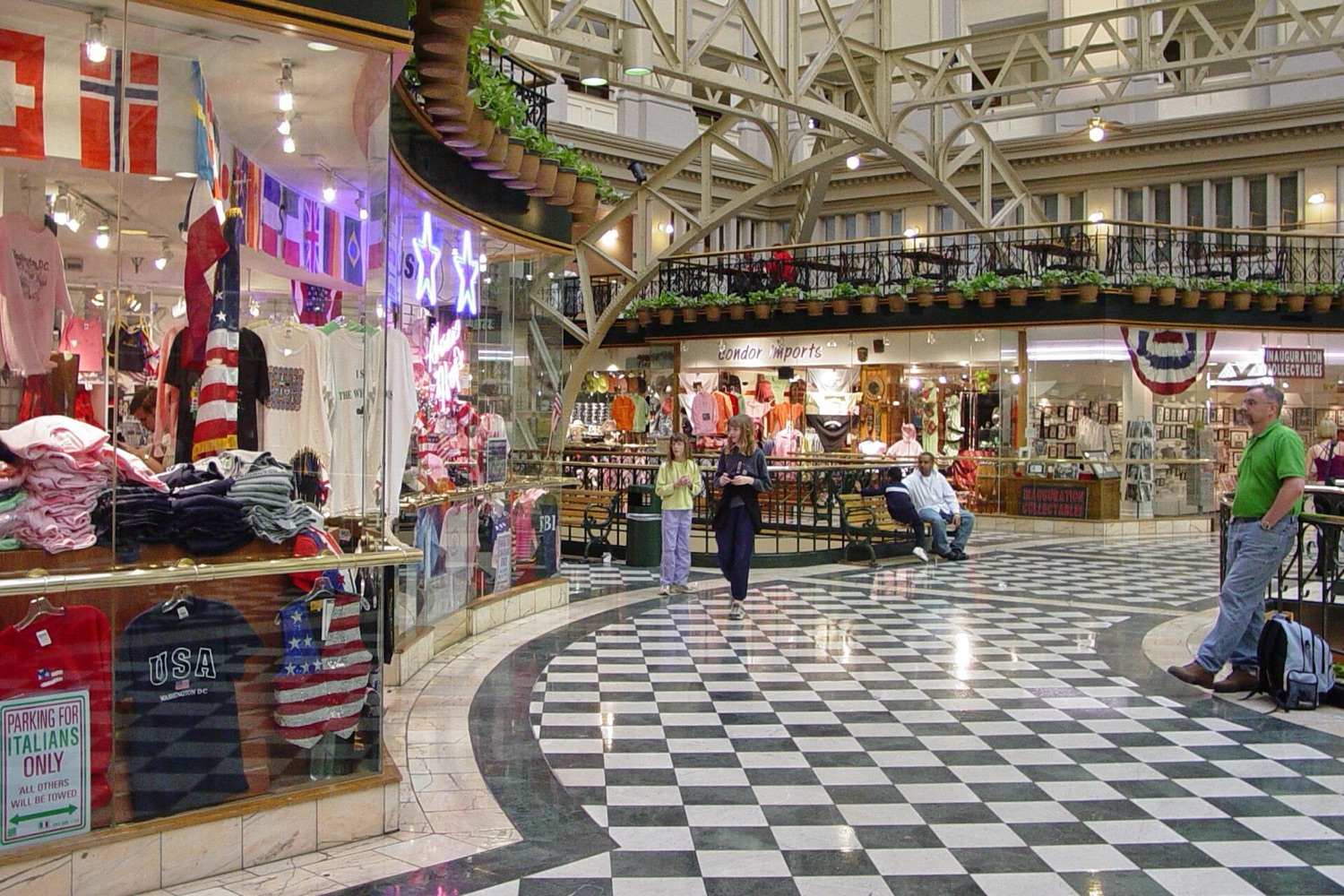
When the renovated building reopened in 1983, its lower floors held food stalls, souvenir shops and a performance stage, all arranged around the light court under the uncovered skylight. It belonged to the wave of "festival marketplaces" that American cities built in the 1970s and 1980s to bring people back downtown. Above, the upper floors housed the National Endowment for the Arts, the National Endowment for the Humanities and other federal agencies in what was now called the Nancy Hanks Center.
The tower and the bells
The Pavilion era was the golden age of free views. The National Park Service ran tours to the observation level, and the Congress Bells arrived in 1983. The glass elevator added during the renovation carried visitors up through the court, and many Washington families remember it as the cheapest thrill in the city.
The Pavilion competed for day-trippers in a crowded field. In the same years, casino bus trips to the Atlantic City Boardwalk were a fixture of East Coast life, and the District's own lottery, launched in 1982, was selling tickets in every corner shop. The Pavilion's answer was free: a lunch counter, a stage and the best view in town.
The annex
In 1991 a glass-walled Pavilion Annex was added on a former parking lot beside the building, with more shops and restaurants. It never quite succeeded and was later included in the redevelopment, which explains why the 2008 Act refers specifically to the "Pavilion Annex".
Why the Pavilion faded
- Location: the building sat in a government precinct that emptied at night and at weekends.
- Competition: newer food halls and the revival of Penn Quarter drew visitors away.
- Cost: a huge historic building was expensive to heat, cool and maintain.
- Mixed use: security rules for the federal offices did not sit easily with an open marketplace.
By the 2000s many units were empty and the building was losing money. That was the starting point for the 2008 redevelopment Act. The Pavilion closed in 2014 when construction of the hotel began.
Remembering it
Nothing quite like the Pavilion exists in Washington today. Its spirit lives on in the idea, written into every stage of the redevelopment, that the public should still be able to enter the building and climb its tower. Compare the hotel era in From Trump International to Waldorf Astoria.