When the Old Post Office was nominated to the National Register of Historic Places in 1973, the nomination described the huge clock tower as an element of great vitality in the otherwise sterile skyline of the Federal Triangle. That judgement still explains why Washington fought to keep it.
A landmark of the District
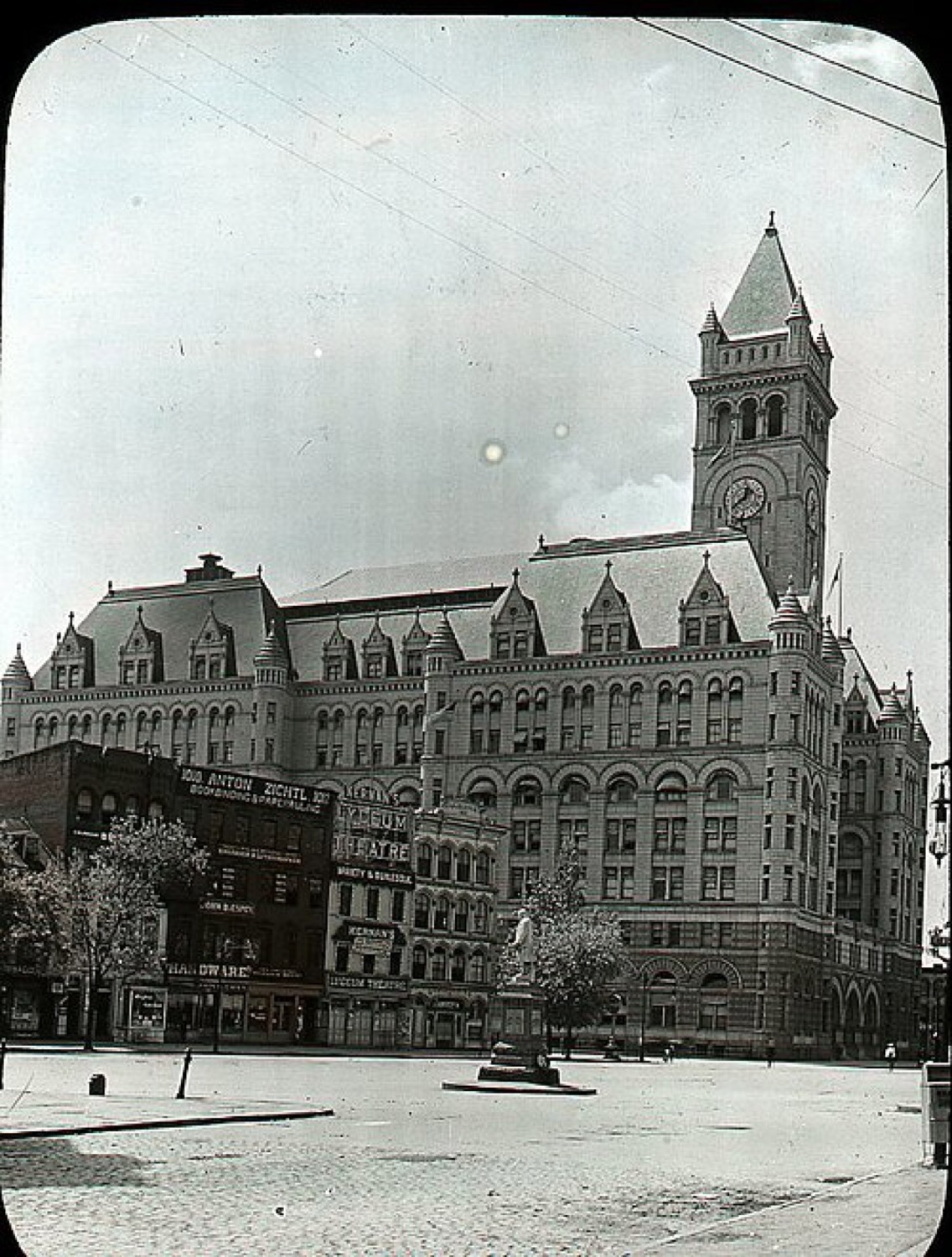
The Old Post Office, visible from several miles away, has long been one of Washington's favourite landmarks. The Joint Committee on Landmarks designated the Old Post Office and Clock Tower a Category II Landmark of importance, one that contributes significantly to the cultural heritage and visual beauty of the District of Columbia.
It is one of Washington's few significant Romanesque Revival buildings on a monumental scale, and it was the first federal building erected on Pennsylvania Avenue in the area now known as the Federal Triangle. Plans were prepared in 1891 in the office of the Supervising Architect of the Treasury, Willoughby J. Edbrooke, whose office designed many similar Richardsonian-inspired federal buildings across the country in the 1890s. When it was completed in 1899, the building and its 315-foot clock tower stood third in height in Washington, exceeded only by the Capitol and the Washington Monument. Its central enclosed court was among the largest in the world.
Home of the Postmasters General
Designed to house the U.S. Post Office Department as well as the Washington City Post Office, the building served as the headquarters of every Postmaster General from 1899 to 1934. It also held the department's Dead Letter Office, where undeliverable mail was opened and sorted, and a small museum of curious items that never reached their owners. Our story Flag Day and the dead letters looks at daily life inside.
Where Flag Day took root
It was here in 1908, according to the building's National Register record, that employees gathered on the second-floor balcony overlooking the court and sang the Star-Spangled Banner, an early observance of Flag Day. On every Flag Day afterwards a complete collection of state flags hung from the walls of the central court. Normally on display was what was described as the largest correctly proportioned U.S. flag in existence, hanging nearly seven storeys from the skylight. On Flag Day it was furled so that it would not dwarf the smaller state flags.
After the post office left
In 1914 the Washington City Post Office moved to a new building next to Union Station. The department stayed until 1934, when the new Post Office Department building across 12th Street was ready. After that the Old Post Office was shared by a series of federal departments and agencies, until the preservation fight of the 1960s and 1970s gave it a new purpose.
| Year | Milestone |
|---|---|
| 1891 | Plans prepared in the office of the Supervising Architect of the Treasury |
| 1892–1899 | Construction on Pennsylvania Avenue between 11th and 12th Streets |
| 1908 | Employees mark Flag Day in the central court |
| 1914 | City post office moves to a new building near Union Station |
| 1934 | Post Office Department moves across 12th Street |
| 1973 | Listed in the National Register of Historic Places |
| 1983 | Reopens after renovation and is renamed the Nancy Hanks Center |