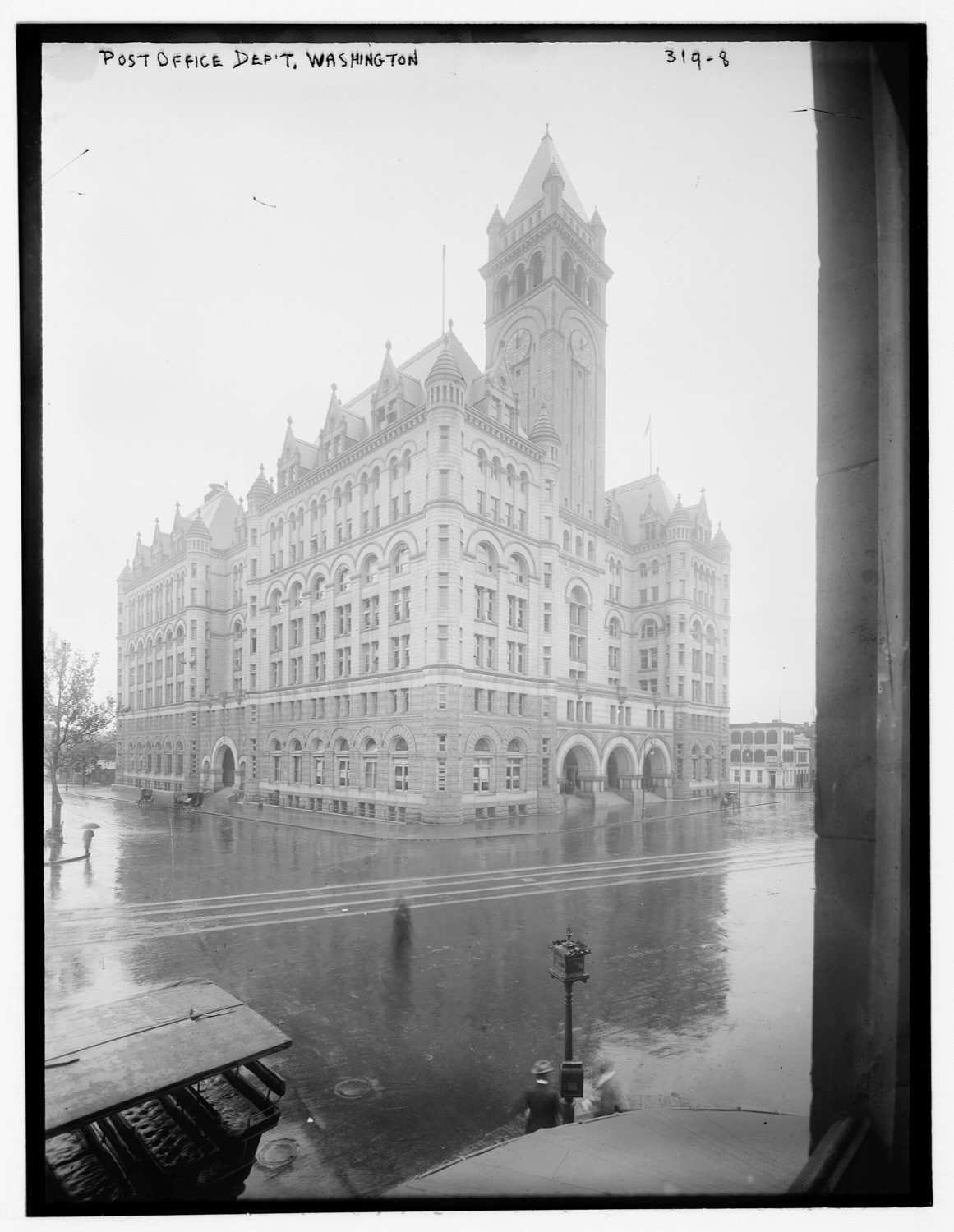
For thirty-five years the Old Post Office was the nerve centre of the largest civilian service in the United States. Every Postmaster General from 1899 to 1934 worked here, and thousands of clerks sorted, audited and investigated the nation's mail under the great skylight.
A building made for mail
The design reflected its two jobs. The ground floor and basement held the Washington City Post Office, with its public counters and sorting rooms, while the upper floors housed the Post Office Department: the Postmaster General, the bureaus that ran rural delivery and money orders, the auditors and the inspectors. The nine-storey light court let daylight reach every office, a practical answer to the problem of reading handwriting before good electric lighting.
Flag Day in the court
According to the building's National Register record, employees met on the second-floor balcony above the court in 1908 and sang the Star-Spangled Banner to the flag, one of the early observances of Flag Day. Afterwards it became a tradition. A complete set of state flags was hung around the court every June 14, while the huge national flag that normally hung almost seven storeys from the skylight was furled so as not to dwarf them.
The Dead Letter Office
Mail that could not be delivered or returned ended up at the Dead Letter Office, where clerks opened it to find a clue to the sender or the addressee. Money, jewellery and documents were recorded and, when possible, returned. Things that could never be returned were sometimes kept, and the department displayed a collection of strange undeliverable objects in a small museum in the building. The National Park Service still mentions the "Dead Letters Museum" in its history of the tower.
The postal war on lottery tickets
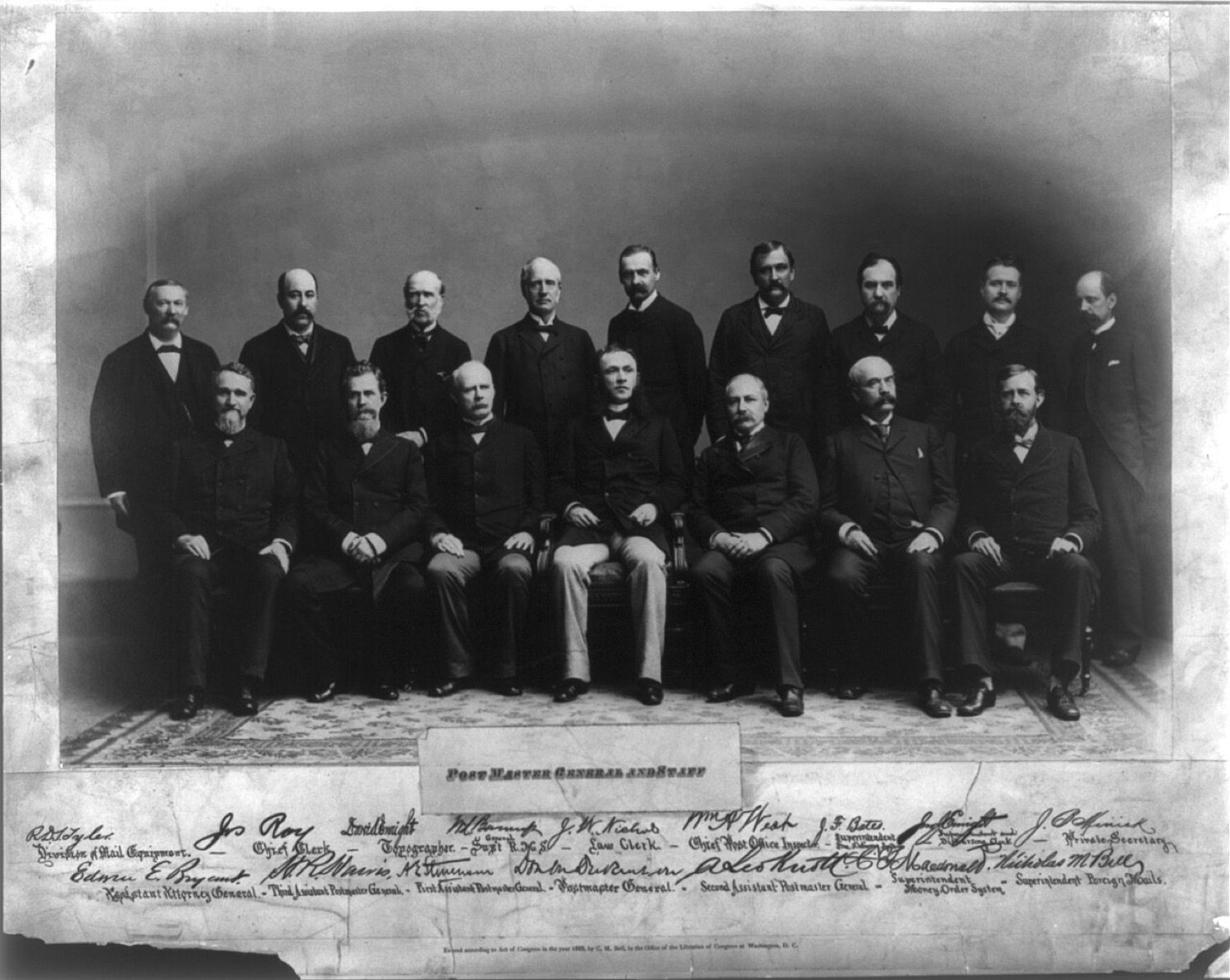
One of the department's less known tasks was policing gambling by mail. Laws passed in 1890 and 1895 banned lottery tickets and advertisements from the mail and from interstate commerce, aimed squarely at the Louisiana State Lottery, which sold tickets nationwide. Postal inspectors and the department's lawyers enforced those bans for decades, which makes the building an unlikely chapter in American gambling history. We tell the longer story, which begins with a lottery that built Washington's first post office, in the lotteries that built Washington.
Moving out
The city post office left in 1914 for the new building by Union Station, now the National Postal Museum. In 1934 the department crossed 12th Street to its new classical headquarters in the Federal Triangle. The Old Post Office kept its name but became a general federal office building, shared by agencies that rarely loved it. For what happened next see historical significance.