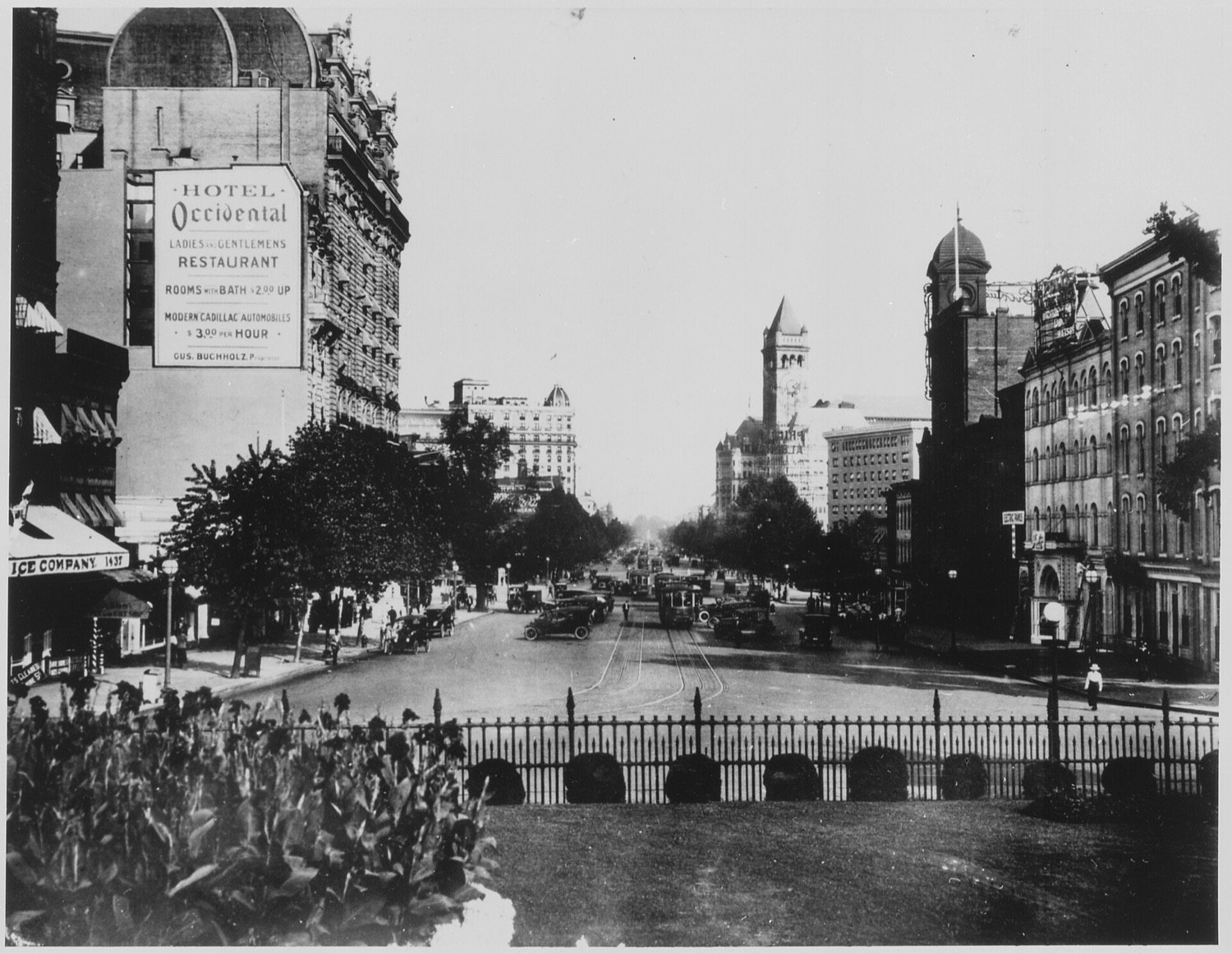
Pierre L'Enfant's 1791 plan gave Washington one great diagonal between the Capitol and the President's House. Pennsylvania Avenue became the city's main street long before it had pavements, and the Old Post Office has watched every inaugural parade since 1901 from its midpoint.
A street of hotels
For most of the nineteenth century Pennsylvania Avenue was where Washington slept, ate and argued. Members of Congress lived in boarding houses and hotels along it, among them the National Hotel near Sixth Street and, later, the Willard near the Treasury. Deals were done in bars and lobbies, and the word "lobbyist" is often, if loosely, linked to the Willard's lobby.
Faro on the avenue
Where politicians gathered, card dealers followed. Before the Civil War the avenue had private gambling rooms where faro, the most popular card game of the age, was dealt late into the night. The best known belonged to Edward Pendleton, a host and lobbyist of the 1850s whose house near the National Hotel was sometimes called the "Palace of Fortune". Contemporary accounts say legislators who lost heavily at his tables found him a useful creditor, and later reminiscences claimed a president attended his funeral. Such houses were illegal on paper and tolerated in practice. Washington has never had a licensed casino; the modern picture is in our guide to Washington DC and gambling.
Parades and decline
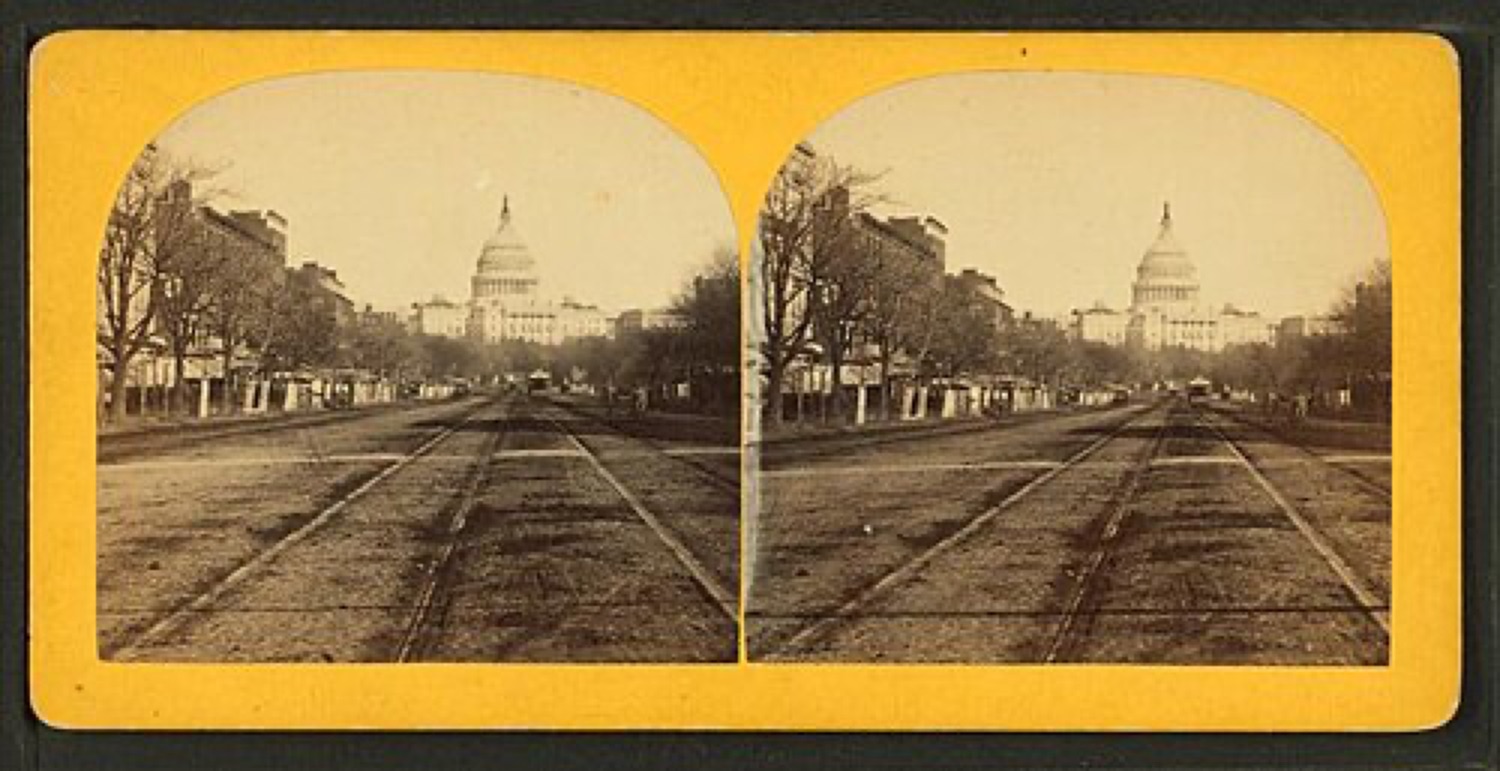
The avenue's ceremonial role grew as its everyday life faded. Inaugural parades, the Grand Review of the armies in 1865, suffrage marches and funeral processions made it the nation's stage. Meanwhile offices replaced homes, the market district declined, and by the early 1960s the north side of the avenue looked tired and half empty. President Kennedy is said to have noticed it during his inaugural parade in 1961.
The renewal
That moment led to the President's Council on Pennsylvania Avenue (1962–1964), the Pennsylvania Avenue National Historic Site (1965) and the Pennsylvania Avenue Development Corporation (1972). After a first plan that would have demolished most of the Old Post Office, the corporation's 1974 plan kept it, restored the avenue's hotels, built new offices and housing, and created public spaces such as Freedom Plaza and Pershing Park.
| Point on the avenue | What is there |
|---|---|
| 3rd to 7th Streets | Canadian Embassy and the former Newseum building |
| 7th to 9th Streets | Navy Memorial, with the National Archives across the avenue |
| 11th to 12th Streets | The Old Post Office and the Benjamin Franklin statue |
| 13th to 14th Streets | Freedom Plaza, the Ronald Reagan Building |
| 14th to 15th Streets | The Willard hotel, Pershing Park, the Treasury |
The hotel comes back
In a sense the Old Post Office hotel of 2016 returned the avenue to its first identity as a street of hotels. Our story From Trump International to Waldorf Astoria follows that chapter, and the Federal Triangle story explains the buildings on the south side.