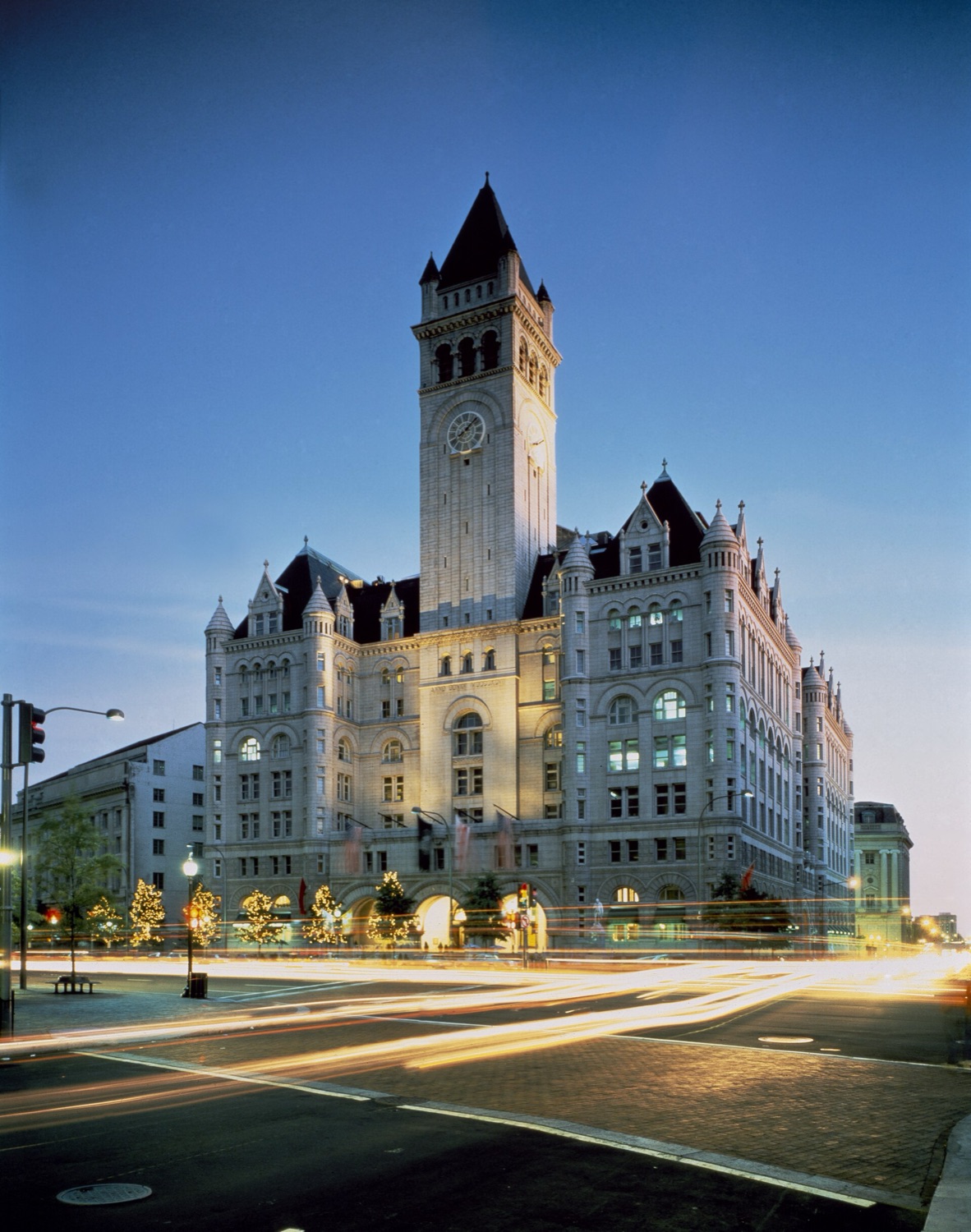
For most of its first eighty years the Old Post Office was the building Washington planners wanted to get rid of. It was too Victorian, too picturesque and too tall for the white classical precinct that grew up around it. That it still stands is one of the great victories of the American preservation movement.
The first death sentence, 1928
The Public Buildings Act of 1926 set in motion the Federal Triangle, a grand ensemble of neoclassical government offices between Pennsylvania Avenue and the Mall. In that vision the 1899 post office was a leftover from an unfashionable era, and plans drawn up in 1928 assumed it would go. Construction moved block by block. By the time seven of the Triangle buildings were done, the Great Depression had drained the money, and the Old Post Office was simply left standing, an orphan in the middle of the new ensemble.
The second, 1964
Thirty years later the threat returned. In 1964 the President's Council on Pennsylvania Avenue, formed after President Kennedy noticed how shabby the inaugural route had become, proposed a sweeping redesign of the avenue. Its plan kept the clock tower as a kind of monument but demolished the rest of the building. Through the late 1960s demolition seemed only a matter of time, and in 1970 Congress approved another attempt to tear it down.
"Don't Tear It Down"
The response came from ordinary Washingtonians. In 1971 a small group of residents founded a protest organisation with a name that said everything: Don't Tear It Down. They held rallies, wrote to newspapers and lobbied members of Congress. The group later grew into the DC Preservation League, which still campaigns for the city's historic buildings.
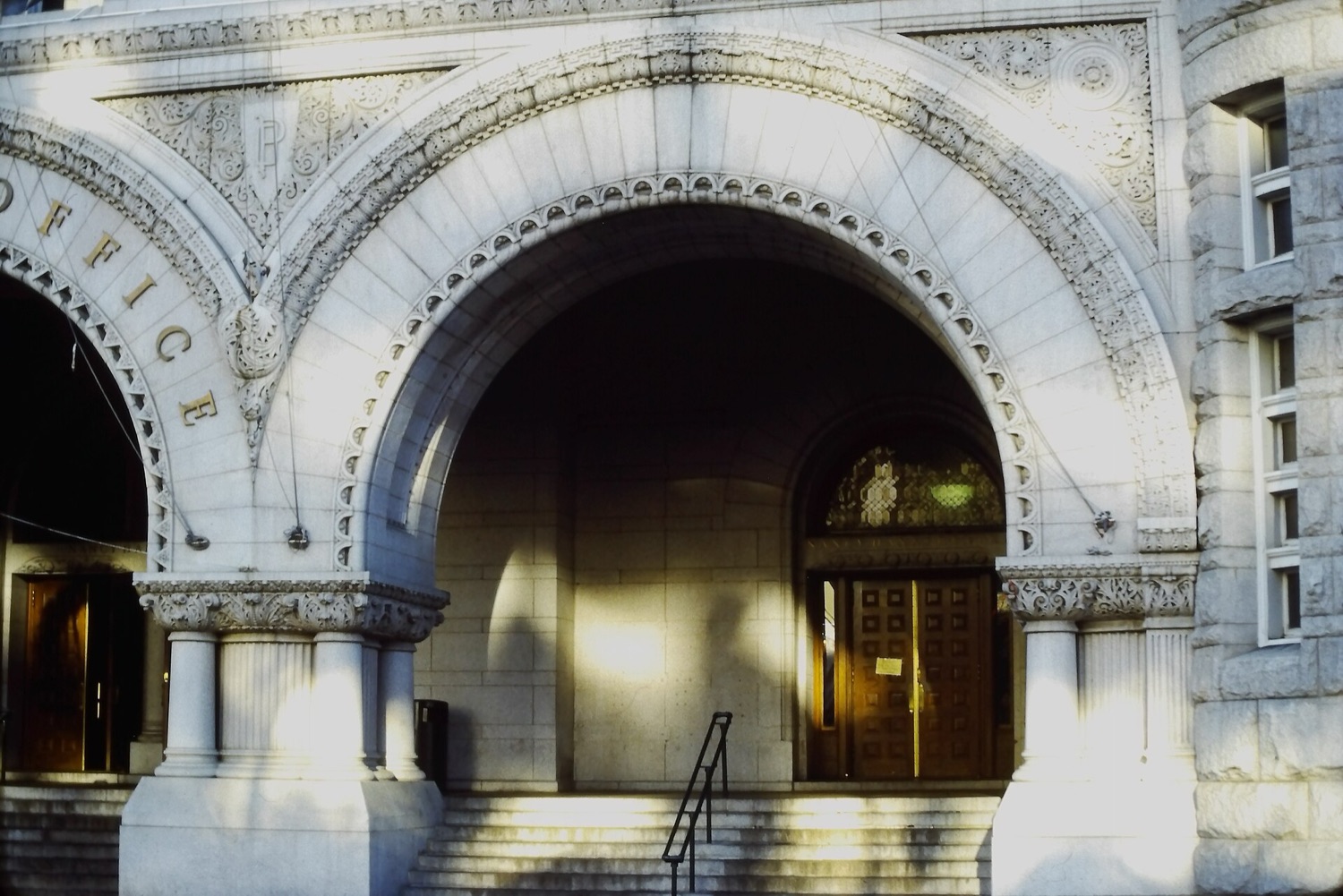
Their most important ally was Nancy Hanks, chair of the National Endowment for the Arts from 1969 to 1977 and one of the most effective arts administrators Washington has known. She argued that an old building could be a working asset rather than an obstacle, and the National Park Service still quotes her line that "old buildings are like old friends." Hanks helped persuade Congress and the administration to reverse course.
Listing, rescue and reuse
- 1972: Congress creates the Pennsylvania Avenue Development Corporation to plan the avenue's renewal; its plan preserves the Old Post Office.
- 1973: the building is listed in the National Register of Historic Places.
- 1976: the Public Buildings Cooperative Use Act encourages federal agencies to put shops and cultural uses into historic federal buildings, exactly the model proposed for the Old Post Office.
- 1977–1983: a renovation led by the architect Arthur Cotton Moore restores the light court and adds shops, food stalls and a stage on the lower floors, with offices above.
- 1983: the building reopens and is named the Nancy Hanks Center. Hanks had died in January that year. Arts and humanities agencies, including her own endowment, move into the upper floors.
The rescue happened in a decade of very different experiments with old buildings. In 1976 New Jersey voters approved casino gambling to revive Atlantic City, and the first casino opened in a converted Boardwalk hotel two years later. Washington chose shops, food stalls and arts agencies instead.
Why it mattered beyond Washington
The Old Post Office became a national example of adaptive reuse. It showed that a historic federal building could be kept, opened to the public and made to earn money. Arguments first rehearsed here, about mixing commerce with heritage, would return decades later in the 2008 to 2026 redevelopment and in the Section 106 review of the hotel conversion.
Saved twice, by money and by people: the Depression saved the building by accident in the 1930s; citizens saved it on purpose in the 1970s. The Pavilion years that followed tested whether the rescue could pay its way.